what time is it supposed to get dark
Knowing the exact time when information technology gets night is equally essential for astronomers and photographers. Darkness and clear heaven are very important for stargazing as a golden 60 minutes for perfect photography.
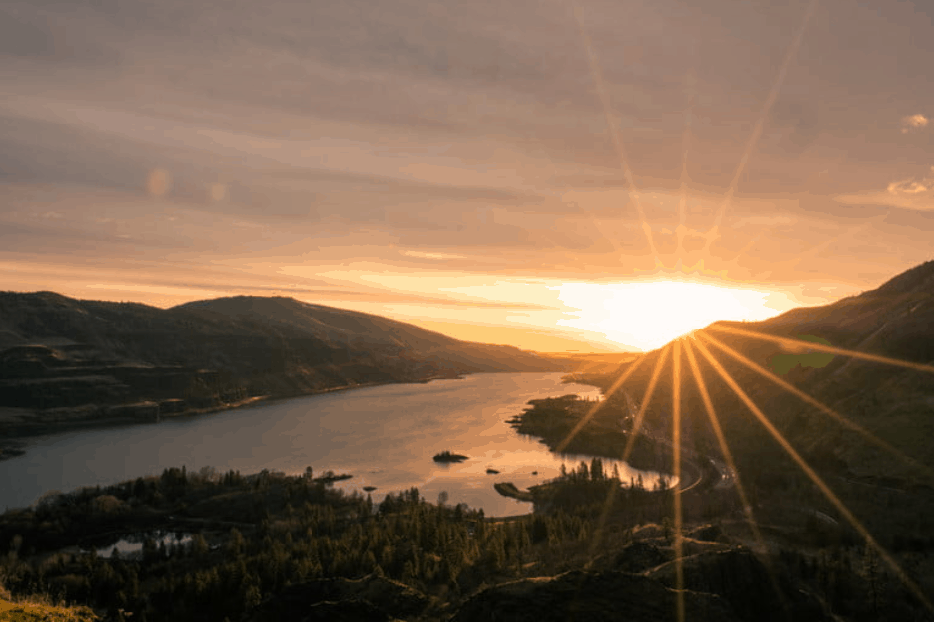
To sympathise how long it takes to get dark tin exist far more complicated than you might think, and the topic depends on a serial of factors like distance to Equator, altitudes, and different seasons.
In the equator's proximity, the dark installs 20 or xxx minutes after dusk, while up north, it takes between seventy and 100 minutes until the nighttime settles.
The Different Types of Twilight
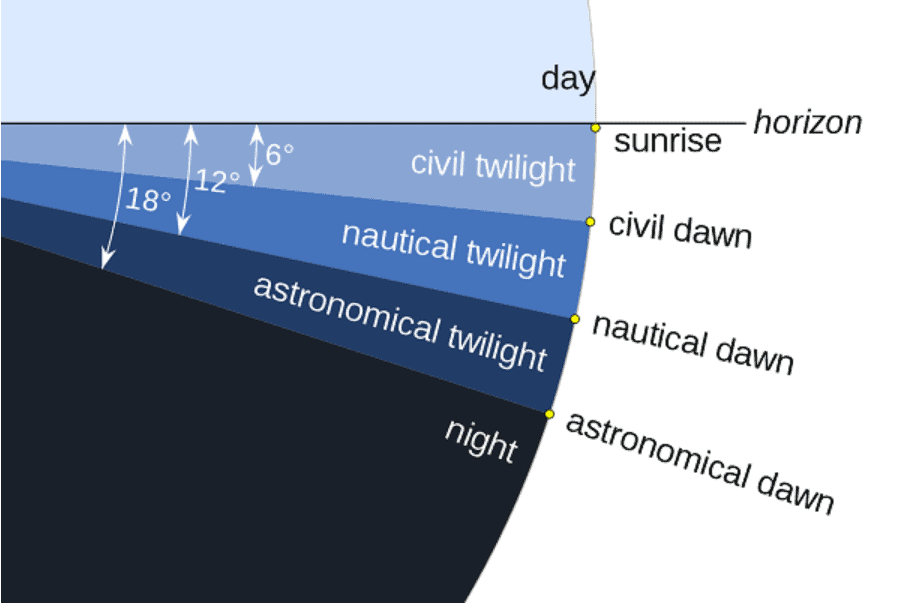
Twilight is the menstruation of time when the sunlight is even so visible, although the Sun is below the horizon. There is a morning time twilight and also an evening one, both having three distinctive phases: ceremonious twilight, nautical twilight, and astronomical twilight.
Each one of these phases has its particular flavor and dissimilar experience for astronomers and photographers. Let's come across what every stage ways.
Ceremonious Twilight
The civil twilight is the phase that begins at sunset and lasts until the center of the Sun is at 6º beneath the horizon. During this stage, the objects are all the same visible on the basis, and artificial lights are non needed if a fog is absent-minded. The astronomers can easily spot Mercury and Venus during this golden hour.
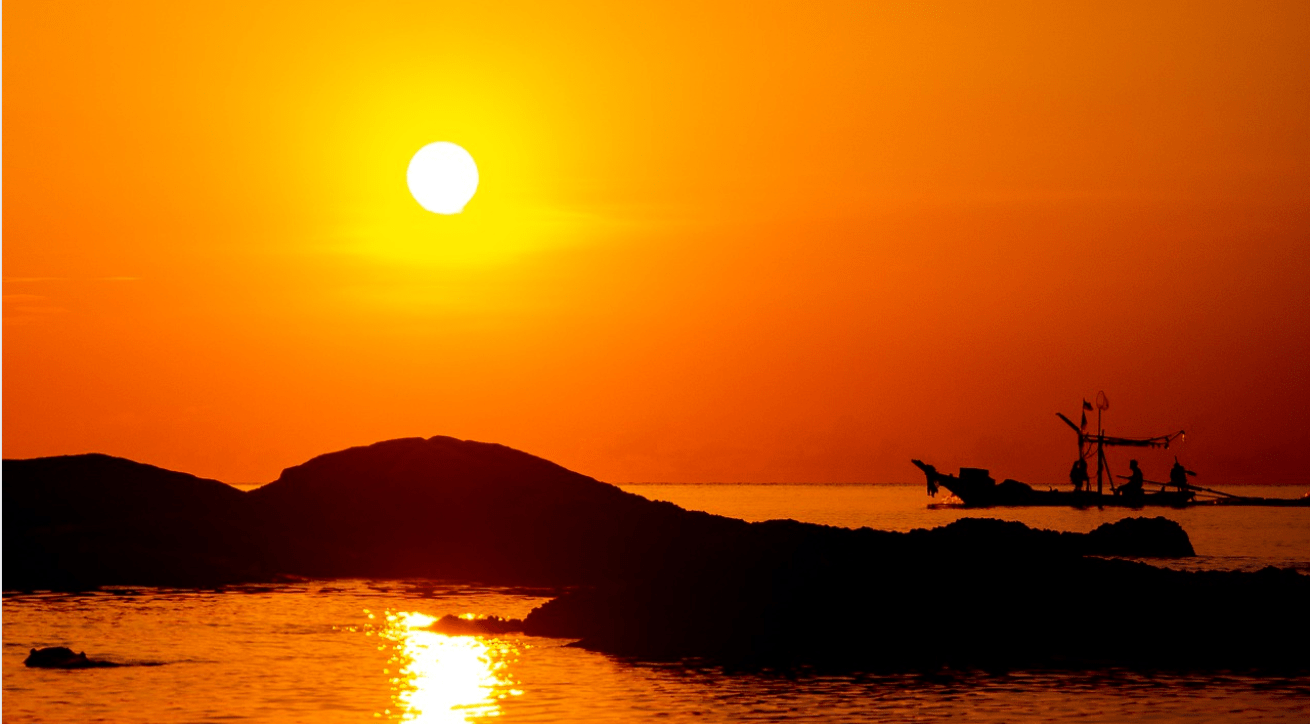
This is also the time when photographers capture astonishing shots without any bogus lite. The civil twilight is known as the "aureate hour" or "magic hour." During this period of time, the diffraction of the solar light makes the white calorie-free modify to reds, and the clouds take on a sequent mode unique xanthous, orange, red, pink, purple, and blue colors.
Nautical Twilight
This phase starts when the geometric center of the Dominicus is at between 6º and 12º beneath the horizon. During this time, the majority of the stars are visible to the naked middle. Photographers are still able to accept shots, but these volition be dark and blurry.
The term "nautical" refers to sailors who can guide themselves via well-known stars and the still visible horizon.
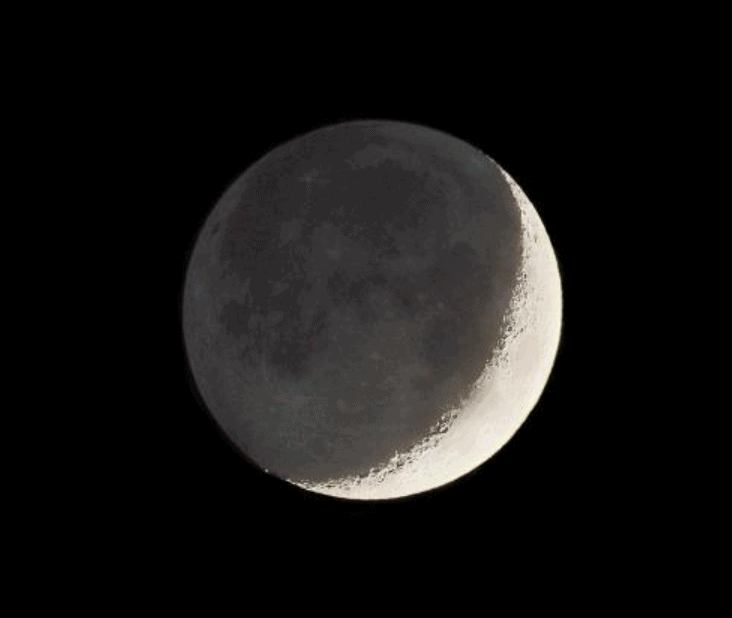
The nautical twilight is the perfect time to observe the dark side of the Moon , which commonly cannot be seen considering it is left in the shadow of the Sunday . During this twilight stage, Earth and Sun'southward alignment allows the Lord's day rays to exist reflected off the Earth onto the Moon (this phenomenon is known every bit Earthshine).
Likewise, the nautical twilight is perfect for starting to scout the aurora borealis. Although the aurora's lights can be very faint at this betoken, it worth observing and make up one's mind on the best position for the camera or telescope.
Astronomical Twilight
The astronomical twilight begins when the eye of the Sun reaches 12º and lasts until 18º. After this period, the actual night begins, although the two phases are very similar to some newbies.
Astronomical dusk is perfect for astronomers to observe the heaven, and it is also a expert time for astrophotography. The normal photographers, however, are unable to have good shots unless they target an illuminated city. Objects can barely exist distinguished, and colors are not visible.
During this stage, the Milky way tin be observed with a naked eye, and the most obscure stars get visible. The Aurora Borealis begins to display beautiful shiny hues of light-green, and although the perfect time to enjoy it is during the darkness phase, some lovely photos can be taken at present.
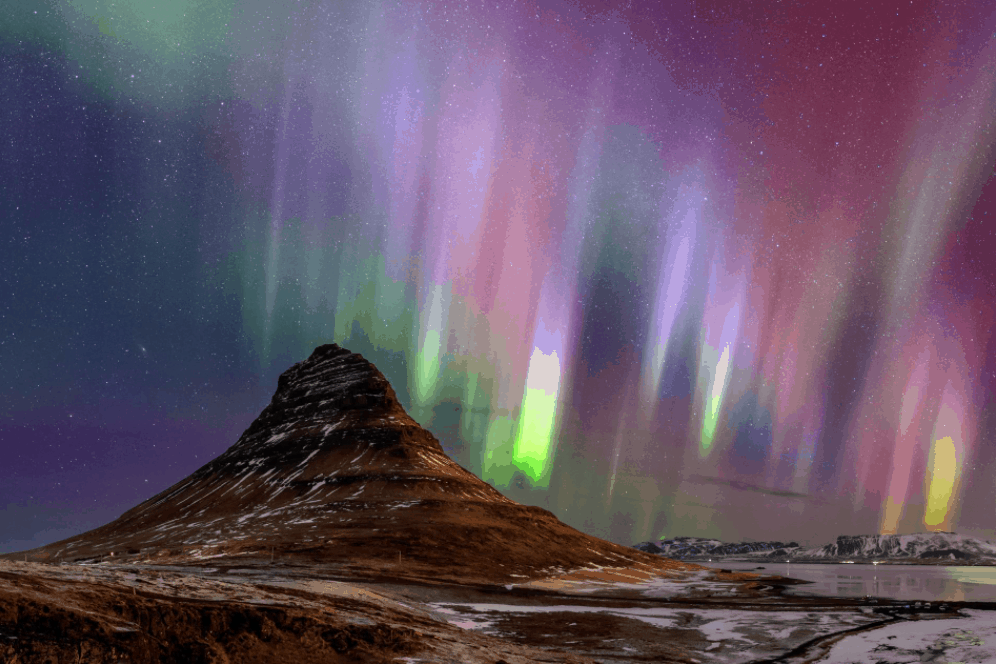
The Aurora Borealis will have a bluish hue while the greens plow into emerald and the reds to regal.
The True Night-Time
Understanding what the night time is can exist relatively like shooting fish in a barrel. One time all the twilight phases passed, the true night begins. Basically, the dark is pure darkness, the time when there is no light pollution from the Sunday. The all-time stargazing experience is during the night time, and an astronomer should expect until he is unable to come across the Sun'due south fading light at the horizon.
Scientifically, the night is the period of fourth dimension when the center of the Sunday is between 18º and 90º below the horizon. An important thing to notice is the fact that the night time is influenced by several factors such as location relative to the equator and the seasons.
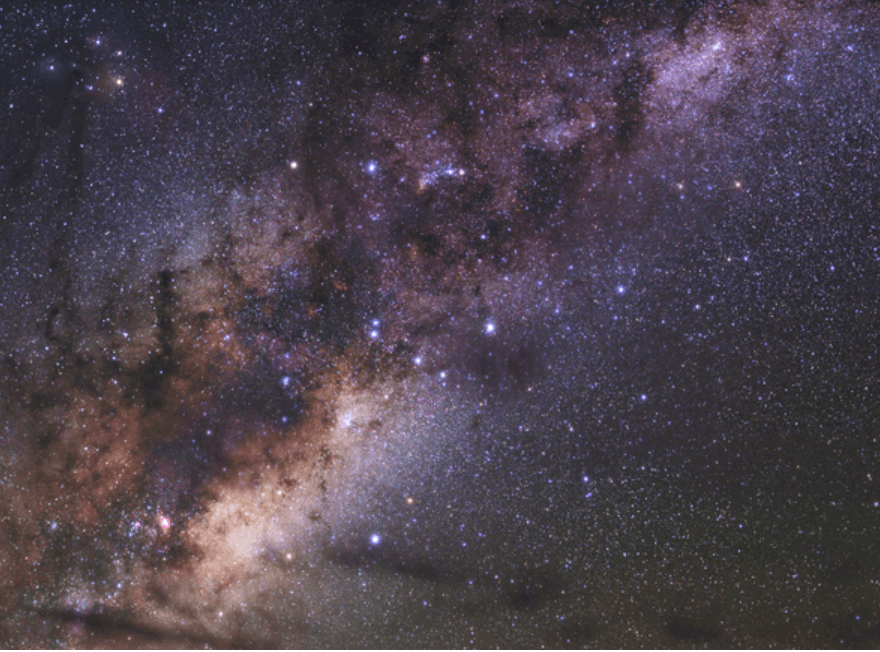
The night time is the perfect moment to observe the sky and its wonders. Those passionate about astrophotography volition capture astonishing images of the Galaxy, Aurora Borealis, and other sky phenomena.
Proximity to the Equator and Location
I of the most important factors that influence the length of the night time is the latitude. Those closer to the equator (breadth 0º) will notice that nighttime comes much faster. Closer to the poles, the Sun takes a more than gentle angle through the sky; therefore, it takes more than time to get dark.
Apart from the proximity to the equator, some other factor to consider is the distance. Subsequently, sunsets can be observed in high mountains equally the horizon is lower. An interesting phenomenon was also noticed in the mountain area: double dusk. The Sun vanishes afterward a part of the mountain just to reappear on another office before setting ultimately. The aforementioned happens in the cities with really tall buildings. However, the phenomenon lasts just three minutes.
Seasons
During the year, the Earth changes its position effectually the Sun, which affects the lengths of the night time. Nonetheless, for nearly of the areas, the difference is not significant (just a couple of minutes), but it gets more enjoyable while yous go up Due north.
In some cases (Alaska), during the summer months, there is no night at all. This is happening because the Sun never gets past 6º below the horizon. The phenomenon is known as Midnight Sun, and it is quite essential for the locals and non just.
However, during the winter months, the folks living at the poles experience the Polar Night when the night lasts more than than 24 hours. However, it is not entirely nighttime everywhere in the polar circle merely only in regions within 5.5º of the poles and when the Moon is beneath the skyline. The remainder of the places but have more twilight than equatorial regions.
Solstice and Equinox
Two times a year, the daytime equals the night. These events are known as Equinoxes , and they happen when the center of the Sun is right above the equator. During these events, the sunlight's refraction causes the Lord's day to be seen above the horizon when it's really beneath the skyline.
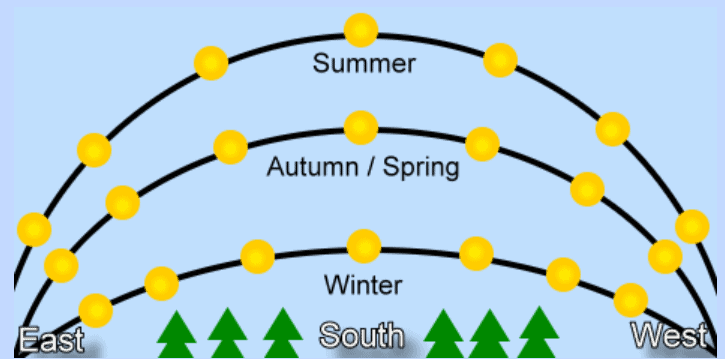
The Equinoxes occur on the twenty th of September, days getting shorter after, and 23 rd of March, when the days' length increases.
The Solstices mark either the longest 24-hour interval of the year (in June) or the shortest (in December). These events happen when the Globe'south axis tilt from the Lord's day is at the maximum. The Sun appears to be at the highest signal in the sky.
Then How Long Does Information technology Have to Get Night afterwards the Sunset?
In curt, it takes somewhere between 70 and 140 minutes for the Sun to go past 18º below the horizon and reach the night phase. Still, closer to the equator, the timeframe would be effectually 23 minutes.
If nosotros await at some figures during the March equinox when the day time is the aforementioned for everyone, we will observe that at the equator, it gets dark faster than upwardly north.
- Quito, Republic of ecuador – true night – 19:33 (+68 minutes)
- Kansas, USA – true night – 21:02 (+ninety minutes)
- Anchorage Alaska, The states – true night – 22:53 (+155 minutes)
Determining the twilight times for a particular region might prove difficult, merely many websites and apps are designed to assist. And so, before going out to stargaze, yous might desire to check one of the reliable sources that will requite you lot the exact timings for the correct moment to commencement watching the sky.
Did you know?
- The pollution is causing-The amazing beautiful sunsets' colors. Local pollution over big cities might cause reddish sunsets. However, if the smog level is as well high, the entire celestial bear witness will be hazed.
- The red sunsets predict stormy weather. This is because the red wavelengths intermission through the atmosphere while shorter ones such as blueish are scattered by the grit and moisture particles.
- The Norwegian metropolis of Tromso, located over 200 miles north of the Chill Circle, experience extreme lite variations between seasons. During the winter, Nov to January, the Lord's day remains below the horizon, and this menstruum is known equally the Polar Night. Due to its high altitude, the twilight is more than prolonged during March and September, and then at that place is no actual night.
- The summer solstice occurs on all the planets from our solar system. For instance, on Uranus , the summer solstice happens once every 84 years.
- An interesting phenomenon takes place on every summer solstice in northern Iceland. It is the but identify outside the Arctic Circle where you lot can watch the Sunday never sets. If you await at the skyline, you will see the Sun hovering over the body of water but non going nether the horizon.
- At the Tropic of Cancer (23.43659º north from the equator), during the solstice, around noon, no shadows can be observed. This happens because, at that time, the Sun is precisely at a 90º bending to the Earth.
Sources:
- Lovethenightsky
- Astronomyforbegginers
- Astrojunkies
- Weather.gov
- Timeanddate
- Auroraborealisobservatory
Image Sources:
- https://en.wikipedia.org/wiki/Twilight
- http://www.primaryhomeworkhelp.co.u.k./time/solstice.html
- https://www.digitaltrends.com/photography/when-is-aureate-hour-and-what-is-it/
- https://pixabay.com/ro/photos/golden-hour-orange-apus-de-soare-4604168/
- https://espacepourlavie.ca/en/monthly-sky/time-observe-earthshine
- https://www.nationalgeographic.com/travel/top-10/vii-aurora-destinations/
- https://world wide web.scientificamerican.com/article/subconscious-history-of-the-milky-way-revealed-by-extensive-star-maps/
Source: https://nineplanets.org/questions/how-long-does-it-take-to-get-dark-after-sunset/
0 Response to "what time is it supposed to get dark"
Post a Comment